Lingerie spring sale for all bras Discount 30%

How to Clean a Sex Doll: The Complete TPE and Silicone Care Guide

A quality sex doll is a four-figure purchase, and cleaning is the single biggest factor in whether it lasts two years or ten. TPE in particular is a porous material. Skipped cleanings do not just cause odor. They allow bacteria and mold to establish below the surface where no amount of scrubbing will reach them later.
The good news is that proper cleaning takes about 15 minutes once you have a routine, and the supplies cost less than a dinner out. This guide covers how to clean a sex doll step by step, the differences between TPE and silicone care, drying and powdering, and the specific mistakes that permanently damage doll skin. Follow it and your doll will look and feel the way it did on delivery day for years.
Quick Answer: How to Clean a Sex Doll
Clean a sex doll after every use by flushing used cavities with warm water and mild antibacterial soap, wiping the body with a soft damp cloth, and drying completely with non-dyed paper towels or air drying. Once fully dry, dust TPE dolls with renewal powder or pure cornstarch to restore the skin texture. Never use alcohol, bleach, or boiling water on TPE, and never submerge the head or neck connector.
That is the routine in four sentences. The rest of this guide explains each step in the detail that actually protects your investment, because the difference between a doll that ages well and one that degrades is entirely in the specifics.
Why Cleaning Matters More Than Any Other Maintenance Task
TPE (thermoplastic elastomer) is soft and realistic precisely because it is porous and oil-based. Those pores absorb moisture, body fluids, and lubricant. Left uncleaned, that absorbed material becomes a growth medium for bacteria and mold inside the material itself, not just on the surface. Once mold establishes inside TPE, it cannot be removed. The affected area is permanent.
Silicone is non-porous and far more forgiving, which is part of why silicone dolls cost more. But silicone dolls still require cleaning after every use for basic hygiene, and their surface texture still benefits from correct products and technique.
Beyond hygiene, cleaning protects three things:
- The skin surface. Wrong products (alcohol, acetone, harsh detergents) break down TPE at the molecular level, causing tackiness, cracking, and tearing.
- The skeleton. Water that enters the neck connector, bolt points, or finger wire channels causes internal rust that stains the material from the inside out.
- Your warranty. Most manufacturers, including the brands we carry, void material warranties for damage caused by improper cleaning agents, so correct products also protect your warranty coverage.
Your Sex Doll Cleaning Kit: What You Actually Need
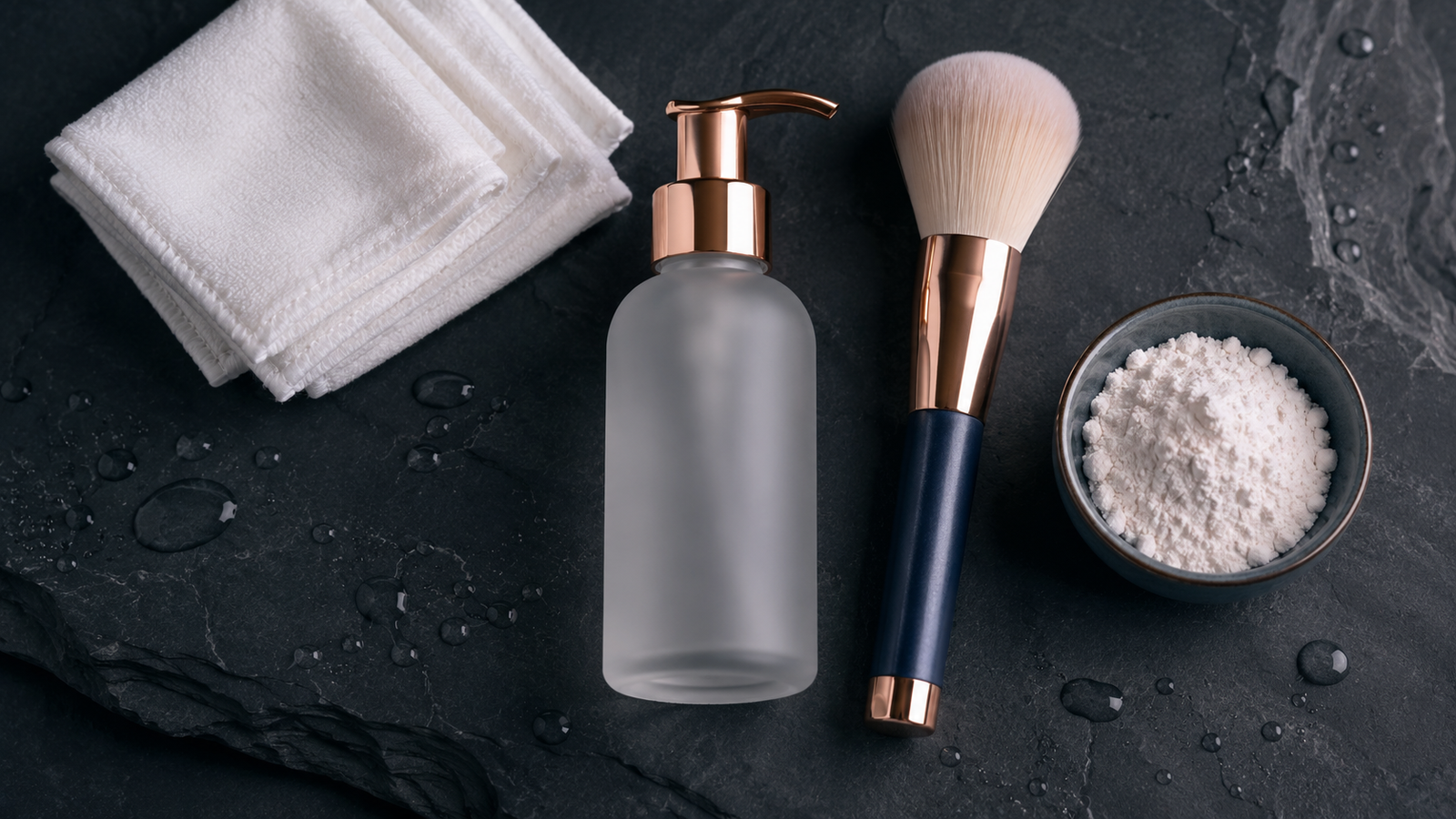
You do not need a cabinet full of specialty products. A complete sex doll cleaning kit consists of:
- Mild antibacterial soap or a dedicated toy cleaner. Unscented, no moisturizers, no exfoliants. Baby soap works.
- A vaginal irrigator or bulb douche. The fastest way to flush internal cavities. A handheld shower head on low pressure also works.
- Soft microfiber cloths and non-dyed paper towels. Dyed or printed towels transfer color to TPE. White only.
- Renewal powder or pure cornstarch. For TPE after drying. Do not use talc-based baby powder; cornstarch is the industry standard.
- A soft powder brush. A large makeup brush is perfect for even application.
- Drying sticks or absorbent rods (optional but worthwhile). These wick moisture out of cavities far faster than air drying.
Every item above is bundled in our complete doll cleaning kits, sized for TPE and silicone owners.
Avoid entirely: rubbing alcohol, hydrogen peroxide, bleach, dish detergent, shampoo with sulfates, and anything with fragrance or color. On TPE, every one of these causes progressive material damage even when the doll looks fine after the first few uses.
How to Clean a Sex Doll After Use: Step by Step
This is the core routine. Do it within a few hours of use, every time, without exception.
- Flush used cavities first. Fill your irrigator with warm (not hot) water and a small amount of antibacterial soap. Flush the cavity two to three times, then flush with clean water until no soap remains. Soap residue left inside a cavity is its own irritant and degrades TPE over time.
- Spot-clean the surrounding area. Wipe the external area and anywhere fluids or lubricant contacted the skin with a soft cloth dampened in warm soapy water. Use light pressure. TPE stretches and tears under aggressive scrubbing, especially at seams.
- Wipe the full body if needed. A full-body wipe-down is only necessary if the doll was in extended skin contact or you used oil-based products anywhere on the body. Otherwise, spot cleaning plus a weekly full clean is the right cadence.
- Rinse away all soap. Go over every cleaned area once more with a cloth dampened in plain water. Residue is the enemy.
- Dry immediately and completely. Pat dry with white paper towels, then let the doll air dry for two to three hours. Insert drying sticks in cavities if you have them. Moisture trapped in a cavity is the number one cause of mold in TPE dolls.
- Powder TPE skin once fully dry. Dust cleaned areas with renewal powder using a soft brush. This restores the silky surface texture and prevents the tackiness TPE develops after washing. Silicone dolls skip this step.
Total time: about 15 minutes of active work. The drying happens on its own.
How to Clean a TPE Sex Doll: Material-Specific Rules
TPE demands more caution than silicone, and most permanent doll damage happens because owners treat TPE like it is dishwasher-safe rubber. It is not. The full TPE cleaning guide expands on everything in this section.
Water temperature stays lukewarm. TPE begins to soften and deform at sustained temperatures above roughly 104°F (40°C). Hot water that feels pleasant on your skin is already in the danger zone for the material. If the water would be comfortable for a long bath, it is too warm for TPE.
Never submerge the doll. Full-size TPE dolls have steel skeletons with entry points at the neck, and many have wired fingers. Submersion forces water into these channels, and internal rust stains bleed through TPE from the inside. These stains cannot be removed. Clean TPE dolls with cloths and targeted flushing only.
No solvents, ever. Alcohol is the big one because it appears in so many household cleaners and wipes. Alcohol dissolves the oils that keep TPE soft, and repeated exposure leaves the surface dry, tacky, and prone to cracking. Check ingredient labels on anything marketed as a “toy cleaner” before it touches TPE.
Handle stains with the right method. For clothing dye transfer (dark jeans and cheap lingerie are the usual culprits), use a dedicated TPE stain remover cream and patience; it lifts dye over days, not minutes. For most surface marks, a barely damp cloth with a trace of mild soap is enough. Aggressive scrubbing spreads stains and damages the surface.
Oil the skin monthly. TPE slowly loses surface oils through washing and time. A light monthly application of pure mineral oil (baby oil without fragrance) followed by powdering the next day keeps the material supple. This is the step most owners skip and the reason well-maintained five-year-old dolls feel better than neglected one-year-old dolls.
How to Clean a Silicone Sex Doll
Silicone owners have an easier routine, which is one of the reasons to consider silicone if maintenance tolerance is a factor in your purchase decision. The TPE material guide covers that tradeoff in full.
Silicone is non-porous, so fluids and bacteria stay on the surface where soap can reach them. The same warm water and mild soap routine applies, with three differences:
- Silicone tolerates slightly warmer water and does not deform at bath temperatures, though there is no benefit to pushing it.
- Isopropyl alcohol can be used sparingly on silicone for stubborn stains or disinfection, diluted and wiped rather than soaked. This is a silicone-only allowance. It remains strictly off-limits for TPE.
- No powdering required. Silicone does not develop post-wash tackiness. Some owners lightly powder for a matte feel, but it is preference, not maintenance.
The submersion rule still applies. Silicone dolls have the same steel skeletons and the same rust risk. Neck and head stay dry. The silicone cleaning guide covers the full routine, including paint protection.
Cleaning the Head, Face, and Wig
The head requires its own approach because makeup on most dolls is semi-permanent and water exposure shortens its life.
Remove the head if your doll’s design allows it, and remove the wig before any cleaning. Wipe the face gently with a barely damp cloth, avoiding the eyes, lashes, and brows entirely. Never flush or soak the head. Blush and lip color on TPE heads will fade with repeated wet cleaning, so less is more.
Wash the wig separately like human hair: mild shampoo in cool water, air dry on a wig stand, brush from the ends up. A tangled, matted wig ages a doll’s appearance faster than anything else, and wig care takes five minutes a month, and replacement wigs are inexpensive when a style is past saving.
Drying, Powdering, and Post-Clean Storage
Drying is where most mold problems start, so treat it as part of cleaning rather than an afterthought.
Air drying in a room with decent airflow takes two to three hours for surface moisture and longer for cavities. Drying sticks cut cavity drying to under an hour. Never use a hair dryer on heat (TPE deformation risk) and never store a doll with any moisture remaining anywhere on or in it.
Once dry, powder TPE skin, then move the doll to proper storage: lying flat on a soft, non-dyed surface or hanging from the neck bolt in a closet system, out of direct sunlight, in a room that stays under 80°F. Storage position matters more than most owners realize, because TPE under sustained pressure develops permanent flat spots and creases. The storage guide covers positions, cases, and climate rules in detail.
How Often Should You Clean a Sex Doll?
Cavity cleaning happens after every single use, no exceptions and no “it can wait until morning.” A full-body wash every two to four weeks is right for most owners, more often with heavy use or oil-based lubricant. Monthly mineral oil treatment for TPE, and a deep clean plus inspection quarterly, where you check seams, stress points, and cavity condition while you work.
If a doll will sit unused for an extended period, do a full clean, dry, powder, and proper storage session first. Storing a doll dirty is how owners come back to permanent stains and odors that no product will fix.
The Five Mistakes That Permanently Damage Dolls
After the routines, here is the short list of things that cause irreversible damage, because every one of these shows up constantly in owner communities:
- Alcohol or solvent cleaners on TPE. Progressive surface breakdown that starts as tackiness and ends as cracking.
- Submerging the doll or soaking the head. Internal skeleton rust that stains from the inside out.
- Hot water on TPE. Softening and deformation, especially at fine details like fingers and facial features.
- Storing damp. Mold inside cavities and under skin folds. Not removable once established.
- Dyed fabrics in prolonged contact. Dark clothing dye migrates into TPE within hours. Wash new clothing before it goes on the doll, and never store a TPE doll dressed in dark fabrics.
Avoid these five and follow the after-use routine, and there is very little that can go wrong with a quality doll.
Frequently Asked Questions
Can I use soap and water to clean a sex doll?
Yes. Warm water with a mild, unscented antibacterial soap is the recommended cleaning method for both TPE and silicone sex dolls. Avoid soaps with moisturizers, fragrances, exfoliants, or sulfates, and rinse thoroughly so no residue remains on or in the material.
How do you clean a TPE sex doll without damaging it?
Use lukewarm water, mild soap, and soft cloths with light pressure, and dry completely before applying renewal powder or cornstarch. Never use alcohol, bleach, or hot water on TPE, and never submerge the doll, because water entering the skeleton causes internal rust stains.
How often should a sex doll be cleaned?
Internal cavities should be cleaned after every use. A full-body wash every two to four weeks, a monthly mineral oil treatment for TPE dolls, and a quarterly deep clean keep the material in top condition for years.
Can you get mold out of a sex doll?
Surface mold on silicone can usually be cleaned because silicone is non-porous. Mold that has established inside TPE cannot be removed, because the material’s pores allow growth below the surface. Prevention through complete drying after every clean is the only reliable protection for TPE dolls.
Do silicone sex dolls need powder after cleaning?
No. Powdering after washing is a TPE-specific step that restores surface texture and prevents tackiness. Silicone does not develop tackiness after washing, so powder is optional and purely a matter of feel preference for silicone owners.
What should you never use to clean a sex doll?
Never use rubbing alcohol, bleach, hydrogen peroxide, acetone, dish detergent, or any scented or dyed product on a sex doll. On TPE these cause permanent material breakdown, and even on silicone they offer no benefit over mild soap while adding risk to painted details.
Final Thoughts
Cleaning is not the glamorous part of doll ownership, but it is the part that determines whether your doll is a durable long-term companion or an expensive lesson. Fifteen minutes after each use, a monthly oil and powder session for TPE, and complete drying every time. That is the entire discipline, and new owners can fold it into the broader day-one routine in the first-time owner guide.
Everything mentioned in this guide, from irrigators and drying sticks to renewal powder and TPE-safe stain removers, is available in our cleaning and care collection, and every doll we ship includes a printed quick-reference care card based on this guide.